Quick answer
Fluted panels suit a TV wall because their vertical grooves add texture without competing with the screen, and the panel build-up gives you somewhere to hide cables and lighting. Plan the TV mounting, the cables and the lighting before the panels are fixed. Changing them afterwards means taking panels off.
Seven ways to do it
- Full-height fluting. Panels from floor to ceiling across the whole wall. The strongest statement, best on a wall without windows or doors.
- A fluted band behind the screen. Fluting only in the centre, with plain panels or painted wall on each side. Less material and a calmer result.
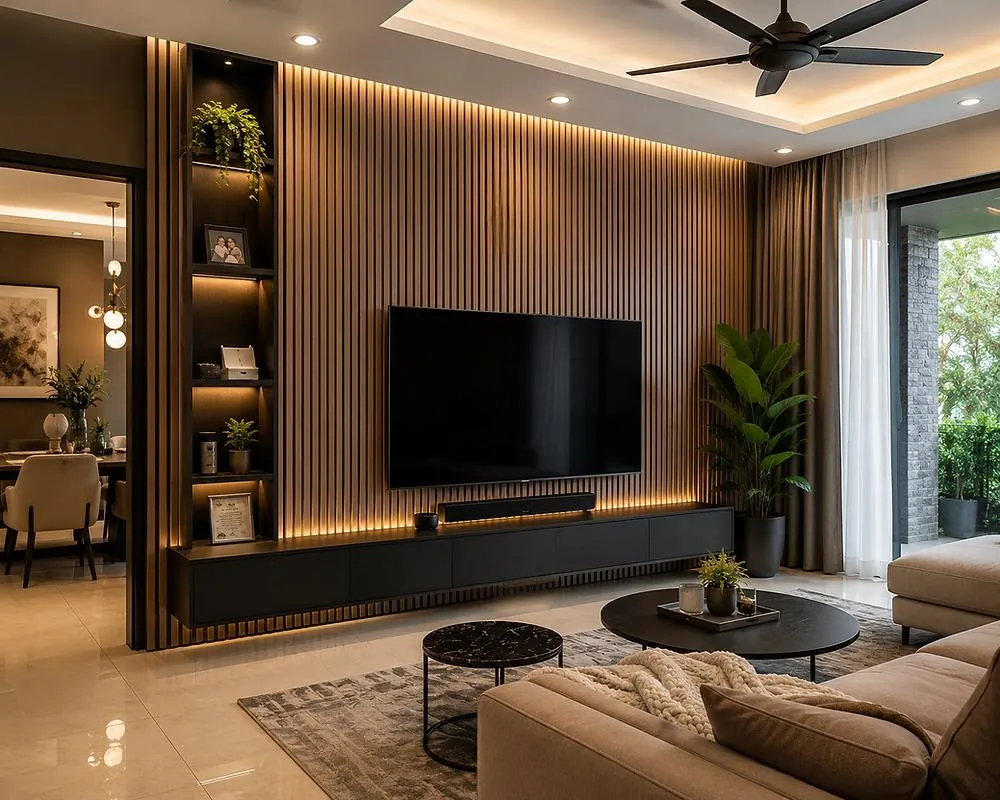
- Backlit edges. A concealed light strip at the sides or the top washes the grooves with light and makes the wall glow in the evening.
- Dark and dramatic. Walnut or charcoal tones make the screen disappear when it is off. Best in a room with good daylight.
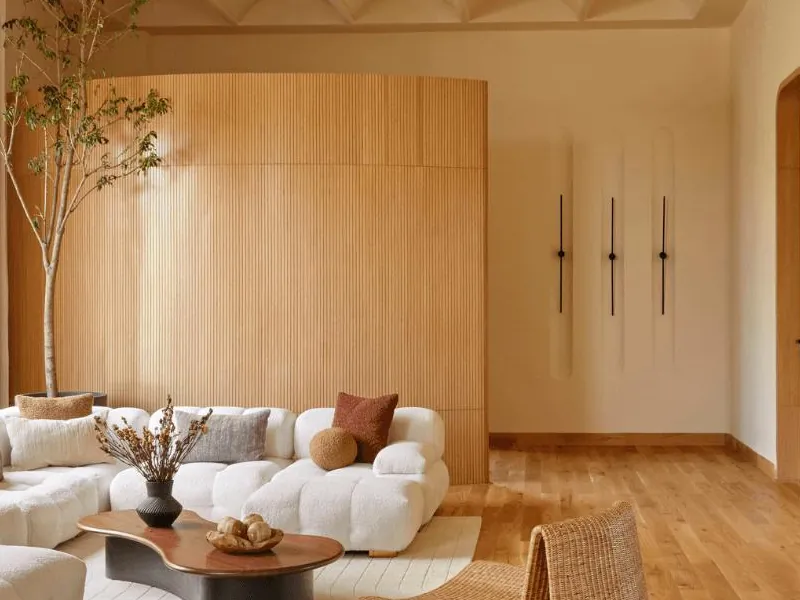
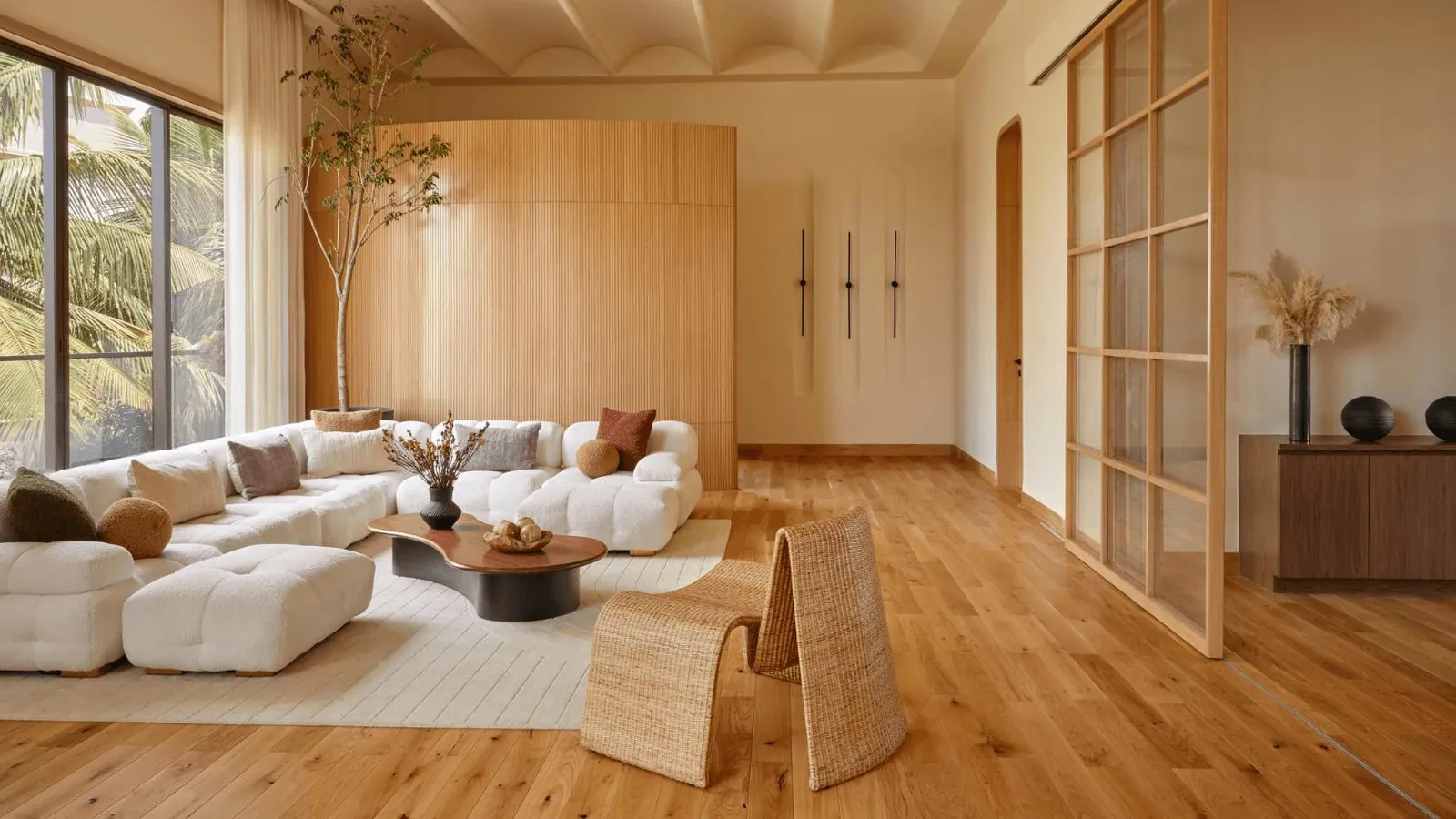
- Light and airy. Pale oak tones keep a small living room feeling open.
- Fluting with a stone-look panel. A smooth marble-look section behind the TV, framed by fluting on either side.
- Carried onto the ceiling. The fluting continues overhead for a short distance, which frames the seating area below.
Five things to plan first
- The TV and its mounting. Decide the screen size and height first. A wall-mounted TV needs solid support behind the panels at the fixing points, so this is built in before the panels go on.
- Cables and sockets. Power, the set-top box, speakers and a games console all need a route. Conduits and socket positions are set before panelling, so no cable shows afterwards.
- Lighting. If you want backlighting, the light channels and the place for the driver are part of the design. The driver needs to stay reachable for replacement.
- The wall itself. The wall must be sound and dry. Damp is treated first, and an uneven wall may need a frame behind the panels.
- The panel layout. Wall height against panel length decides whether there are joins and where they fall. Good layouts put joins where a shelf or a trim hides them.
Choosing the material
Fluted panels are made in several materials, and they differ in how they handle moisture, knocks and close inspection. See WPC, PVC, MDF or charcoal: wall panel materials compared before you settle on one.
Matching the floor
A feature wall and a floor are seen together, so choose their tones together. A wall a shade or two darker than the floor reads as deliberate. An almost-match usually looks like a mistake. If you are also planning wooden flooring, look at samples of both in the room, in daylight and at night.
Common questions
Can the TV be fixed to the panels themselves?
No. The bracket is fixed to the wall or to solid support built in behind the panels. The panels are a finish, not a structure.
Do the grooves collect dust?
A little. A soft brush or a dry cloth run along the grooves now and then is enough.
How long does a TV wall take?
It depends on the wall area and the design, including any lighting. Your quotation states the working days.
What it costs
Wall panels are priced for the wall, not from a fixed rate card. The material, the profile, the wall area, the lighting and the condition of the wall all change the figure. Send us the wall dimensions and a photo, and request a free quote. Our own team assesses the wall and installs the panels.
More on what we install: decorative wall panels in Hyderabad.