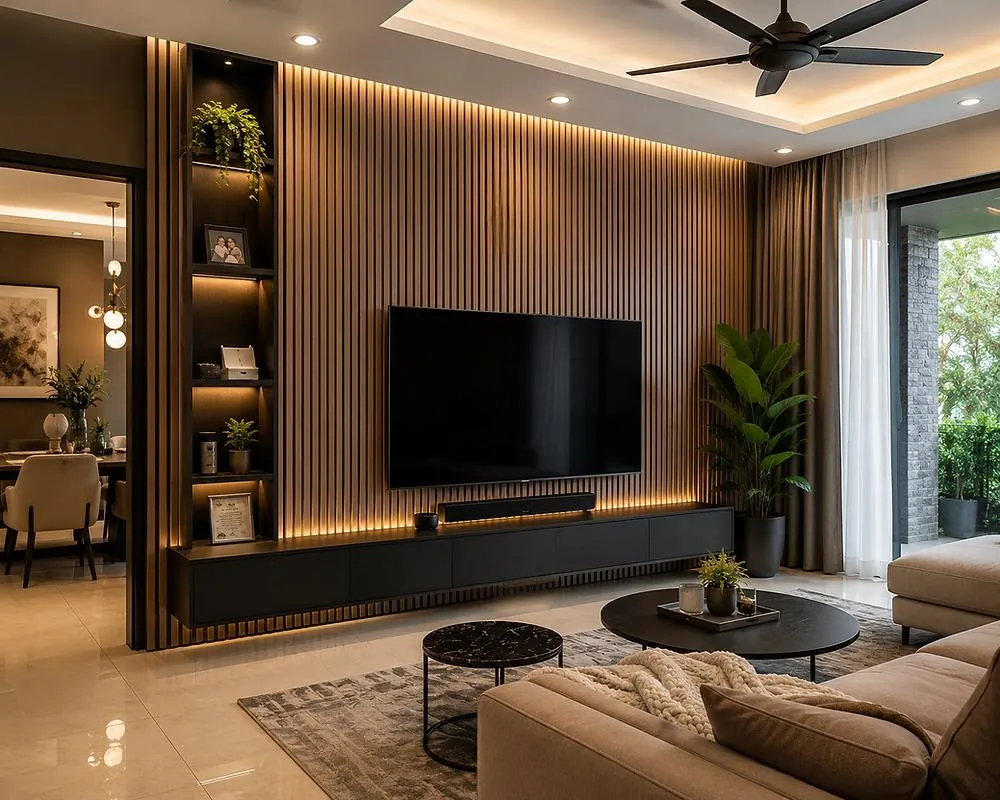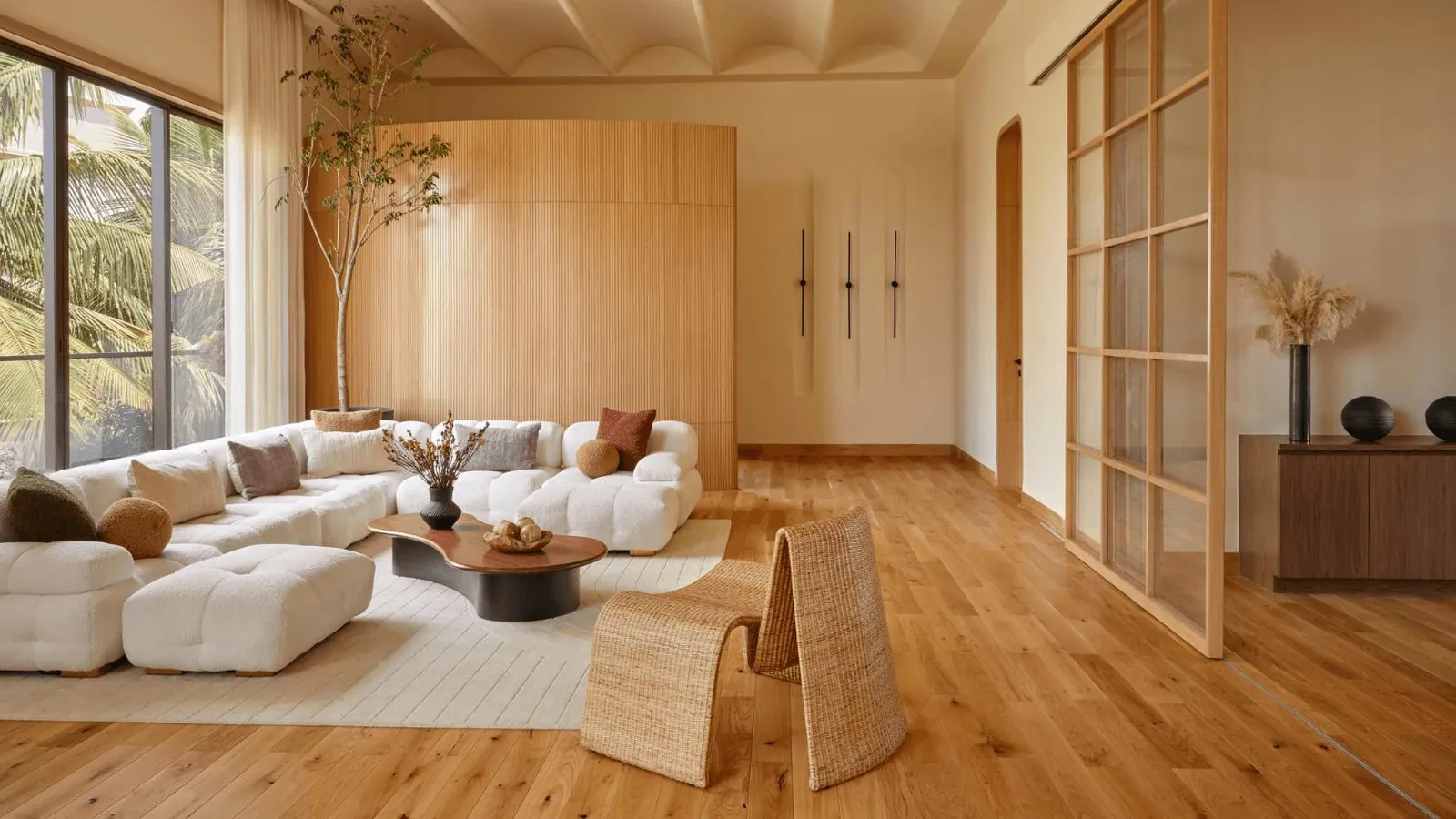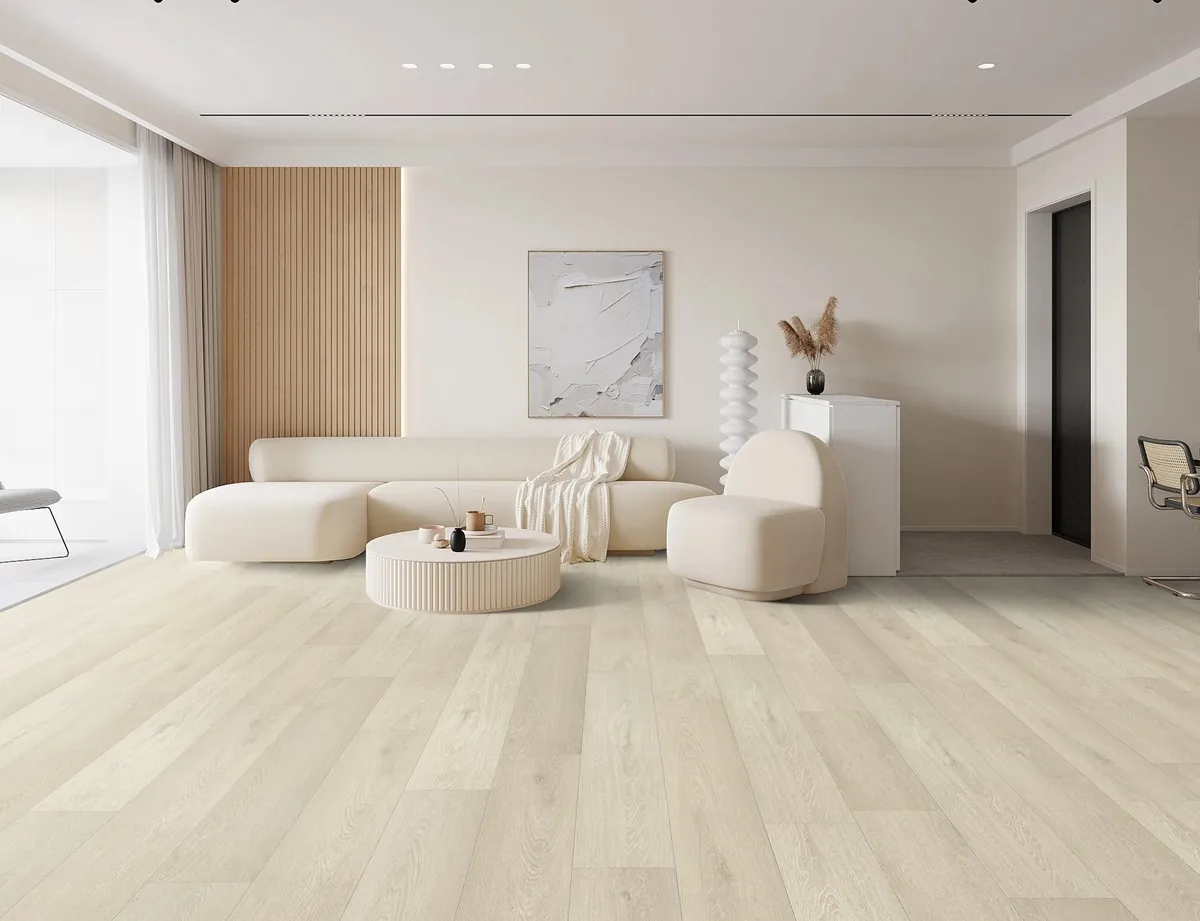

Quick answer
For a dry living room or bedroom wall, most materials will do, and the choice comes down to finish and budget. Where there is any risk of damp, avoid MDF. For a wall people will see and touch up close, look at the denser materials. Names vary between sellers, so always ask what the panel is actually made of.
The materials at a glance
| Material | What it is | Moisture | Worth knowing |
|---|---|---|---|
| WPC | Wood-plastic composite: wood fibre bound with polymer | Resists moisture | A wood-toned look with little upkeep. Can be affected by strong direct heat. |
| PVC | A plastic panel, usually hollow and light | Does not absorb water | Light and easy to clean. Can look less convincing up close than denser panels. |
| MDF and HDF | Compressed wood-fibre board, finished with paint, laminate or veneer | Swells if it gets damp | Crisp edges and a smooth finish. For dry walls only. |
| Charcoal panels | Usually a lightweight polystyrene-based panel with a decorative surface | Claims vary by product | Light and quick to fit. Ask for the product data sheet. |
| Solid wood and veneer | Real timber, or a thin layer of it on a board | Needs protection from damp | The most natural look, and the most care. |
WPC
WPC blends wood fibre with polymer and is moulded into fluted, slatted or flat profiles. It gives the warmth of a wood tone and is widely used for TV walls and bedroom feature walls. It is a composite, so up close it does not have the grain of real timber, and it should be kept away from strong direct heat.
PVC
PVC panels are light, do not absorb water and wipe clean. They are usually the lower-cost option. The trade-off is in the feel. A hollow plastic panel can sound and look lighter than a denser one, which matters more on a wall at eye level than on a ceiling.
MDF and HDF
These are engineered wood-fibre boards. They machine cleanly, so grooves and edges are crisp, and they take paint, laminate and veneer well. Their weakness is water. A damp wall or a leak makes the board swell, and it does not return to shape. HDF is the denser, harder-wearing version of the same idea.
Charcoal panels
The name describes the dark colour of the core, not a single standard material. Most panels sold as charcoal panels or charcoal louvers are lightweight and polystyrene-based. Sellers describe their moisture and heat resistance differently, so ask for the data sheet for the exact product before choosing it for a kitchen wall or anywhere near heat.
Choosing by wall
- TV wall or bedroom wall, dry: any of the materials. Choose on finish, feel and budget.
- A wall with a bathroom behind it, or any history of damp: avoid MDF. Treat the damp first, whatever the material.
- Near a hob or other heat source: check the product’s heat tolerance before fitting.
- Reception or office wall: choose for durability, and ask the supplier for the panel’s fire rating.
- A wall seen and touched up close: denser panels and real wood finishes reward the closer look.
Questions to ask a supplier
- What exactly is the panel made of?
- What are the thickness and the density?
- Is it rated for damp areas?
- Is there a fire rating, and can I see the test report?
- How is it fixed: adhesive, clips or a frame?
- What does the manufacturer’s warranty cover?
Common questions
Which material is best for a TV wall?
On a dry wall, WPC and MDF are both common choices. Decide on the finish you like and how closely the wall will be seen.
Are wall panels waterproof?
PVC does not absorb water and WPC resists moisture. MDF does not. Whatever the panel, the wall behind it must be dry before it goes up.
What is the difference between louvers and fluted panels?
The names overlap. Fluted usually means fine, closely spaced grooves. Louvers usually means deeper, wider slats.
For layout ideas, see fluted wall panels for a TV wall. For whole-wall finishes in offices and receptions, see interior wall cladding. Send us the wall dimensions and a photo, and request a free quote. Our own team assesses the wall and installs the panels.