Quick answer
Choose SPC for rooms where water, spills or heavy use are likely, because its stone-polymer core does not absorb water. Choose laminate for dry bedrooms and studies where you want a wide choice of wood designs at a lower cost.
Neither is real wood. If you want a real timber surface, look at engineered wood instead.
How each one is built
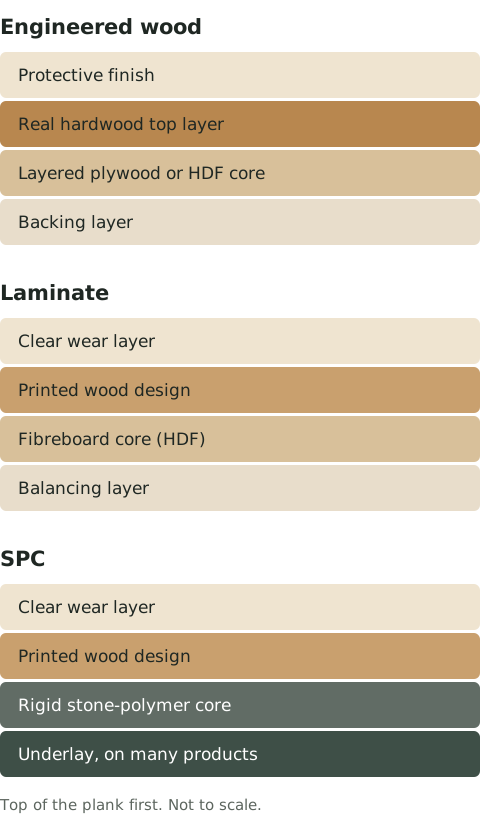
Laminate has a core of high-density fibreboard, which is compressed wood fibre. A printed wood design sits on top, protected by a clear wear layer.
SPC stands for stone polymer composite. Its core is a rigid mix of limestone powder and PVC, with a printed design layer and a wear layer above. It contains no wood fibre.
Side by side
| Laminate | SPC | |
|---|---|---|
| Core | Wood-fibre board (HDF) | Stone-polymer composite |
| Water | The surface resists splashes. The core can swell if water reaches the joints. | The plank itself does not absorb water. |
| Typical thickness | Usually 8 to 12 mm | Usually 4 to 7 mm |
| Wear rating to ask about | AC rating: AC3 for normal home use, AC4 and AC5 for heavier use | Wear layer thickness, stated in mm |
| Feel underfoot | Slightly warmer and softer. Can sound hollow without a good underlay. | Firmer and denser. |
| Subfloor | Needs a flat base | More tolerant of minor unevenness, but still needs a level base |
| Indicative price here | ₹130 to ₹260 per sq ft | ₹130 to ₹320 per sq ft |
The price ranges are for material and standard laying. GST, skirting and floor preparation are extra.
Water is the deciding difference
Standard laminate is not waterproof. A wiped-up spill does no harm, but water that sits on the floor and reaches the joints can swell the fibreboard core, and swollen edges do not recover.
An SPC plank resists water, which is why it is chosen for busy rooms and homes where spills are routine. That does not make the whole floor immune to moisture. Damp rising from the subfloor is a problem under any floor, so the base is checked before either product goes down.
Which one for which room
- Bedrooms and guest rooms: either works. Laminate is usually the lower-cost choice.
- Living and dining rooms: SPC, if drinks and food are part of daily life there.
- Kitchens: SPC is the safer of the two. Laminate only if the product is rated for it.
- Rented homes and offices: SPC, for its tolerance of heavy use.
- Bathrooms and balconies: neither is our first suggestion for constantly wet areas. Tell us the room and we will advise.
What they have in common
- Both come in wood-look planks and usually click together without glue.
- Both can often be laid over existing tiles that are level and sound.
- Both are cleaned with a sweep and a well-wrung damp mop.
- Both need a small expansion gap at the walls, which the skirting hides.
Questions to ask before you buy
- For laminate: what is the AC rating and the board thickness?
- For SPC: what is the wear layer thickness and the total plank thickness?
- Is an underlay attached, or is it separate?
- What does the manufacturer’s warranty cover, and for which rooms?
- Is the price for material only, or for material and laying?
Common questions
Which lasts longer, SPC or laminate?
It depends on the quality of the product and how the room is used. In a dry bedroom both last well. Where water is likely, SPC carries less risk, because moisture is the main thing that ends a laminate floor early.
Can SPC go in a bathroom?
The plank resists water, but a bathroom floor has slopes, drains and standing water to deal with. We usually suggest another material there. Tell us the room and we will advise.
Is SPC hard or cold underfoot?
It is firmer than laminate. Both feel warmer than tile or stone, and an underlay softens the feel and the sound.
You can read more about each on the laminate flooring and SPC flooring pages. Tell us the rooms, the rough area and the look you want, and request a free quote. Our own team assesses the space and installs the floor.